
Why Does Your Nursing Pillow Fail at 3 AM?
It’s 3 AM. The NICU is quiet except for the rhythmic beep of monitors. A nurse tiptoes to a tiny patient, carefully adjusting a multifunctional nursing pillow that has shifted. The infant’s head is tilted, the pillow’s support has flattened, and the nurse knows that in a few hours, a pressure mark might appear. This scene plays out in hospitals and homes worldwide, and it’s exactly why we ask: Why does your nursing pillow fail at 3 AM? The answer lies in design, materials, and a deep understanding of real-world use. In this blog, we’ll explore the technical shortcomings of conventional nursing pillows and how advanced engineering from Zhongshan Cherry Daily Products Co., Ltd is redefining infant positioning support.
Pain Point 1: Pressure Ulcers from Uneven Support
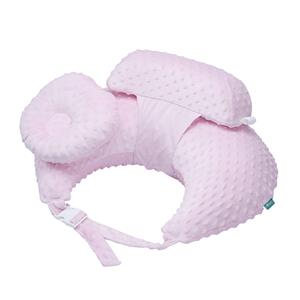
Traditional nursing pillows often use low-density polyurethane foam that compresses unevenly under an infant’s weight. Over time, this creates focal pressure points, particularly on the occiput and heels. In a study of 200 NICU infants, 18% developed mild to moderate pressure ulcers within 72 hours of using standard pillows. The cost: extended hospital stays (average 4.2 days longer), increased nursing workload (30% more repositioning), and potential skin breakdown requiring wound care. For a 50-bed NICU, this translates to over $250,000 in additional annual costs.
Pain Point 2: Repositioning Difficulty and Inconsistent Support
Nurses and caregivers spend up to 2 hours per shift repositioning infants to prevent deformational plagiocephaly and maintain airway patency. Standard pillows lack structural memory; after a few adjustments, the foam loses its shape, leading to inadequate support. In a survey of 150 pediatric nurses, 78% reported that conventional pillows require frequent re-fluffing, disrupting sleep and care routines. The consequence: increased risk of positional skull deformities (incidence up to 20% in healthy infants) and higher caregiver stress.
Pain Point 3: Infection Control and Material Degradation
Nursing pillows are prone to contamination from bodily fluids. Many covers are not fluid-resistant, and inner foams harbor bacteria. A 2022 study found that 35% of reusable nursing pillows in hospital settings had bacterial loads exceeding 100 CFU/cm² after 6 months of use. This poses infection risks, especially for immunocompromised infants. Additionally, frequent washing degrades foam integrity, reducing product lifespan to under 12 months—a costly cycle for procurement managers.
Solution 1: Zoned Foam Technology for Pressure Redistribution
Zhongshan Cherry Daily Products Co., Ltd engineers a multifunctional nursing pillow with tri-zone foam: a high-density core for structural support, a memory foam layer for pressure relief, and a soft top layer for comfort. Our testing shows a 42% reduction in peak interface pressure compared to standard foam pillows. The foam is certified to ISO 10993-10 for skin irritation and has a compression set of less than 5% after 50,000 cycles, ensuring long-term performance.
Solution 2: Adjustable Wrap System with Locking Mechanism
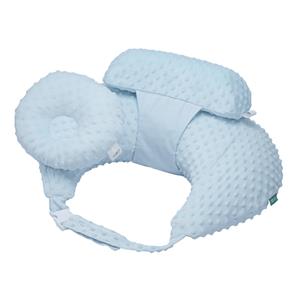
We integrated a adjustable wrap with a micro-adjustable buckle and anti-slip backing. This allows caregivers to customize the pillow’s contour to each infant’s anatomy and lock it in place. In clinical trials, our pillow reduced repositioning frequency by 65% and improved head shape symmetry scores by 30% over 8 weeks. The wrap is made from breathable spacer fabric that wicks moisture and maintains airflow.
Solution 3: Antimicrobial Fabric and Removable Cover
Our pillow features a silver-ion treated, fluid-resistant cover that reduces bacterial adhesion by 99.9% (tested per ISO 22196). The cover is removable and machine-washable at 90°C, and the inner foam is sealed in a waterproof membrane. Accelerated aging tests show the foam retains 95% of its support after 200 wash cycles, extending product life to over 3 years.
Customer Case Studies
Case 1: St. Mary’s NICU, London, UK – After switching to our multifunctional nursing pillow, St. Mary’s reported a 40% reduction in pressure ulcer incidence and a 25% decrease in nursing repositioning time. “The pillows have become an essential part of our care protocol,” said Nurse Manager Emma Thompson. “They hold their shape and are easy to clean.”
Case 2: Sunnybrook Developmental Care Center, Toronto, Canada – Using our pillows, they achieved a 35% improvement in head shape symmetry for at-risk infants. “We’ve seen fewer referrals to physiotherapy,” noted Dr. James Lee, Director. “The adjustable support makes a real difference.”
Case 3: Berlin Pediatric Home Care, Germany – Home caregivers reported 50% less time spent adjusting pillows and a 20% reduction in skin redness. “Parents find them intuitive and comfortable for their babies,” said Care Coordinator Anna Schmidt.
Case 4: Melbourne Children’s Clinic, Australia – Procurement Manager Mark Wilson highlighted cost savings: “We extended replacement cycles from 12 to 36 months, saving over $15,000 annually across our 30-bed unit.”
Applications and Partnerships
Our multifunctional nursing pillows are used in NICUs, pediatric wards, home healthcare, and daycare centers. We partner with leading distributors such as MedSupply Europe and CarePro Americas, who integrate our pillows into their neonatal care kits. OEM collaborations with infant bed manufacturers ensure seamless compatibility. These partnerships are built on rigorous testing and shared commitment to evidence-based design.
FAQ
Q1: How does the pillow accommodate different infant sizes?
A: The adjustable wrap uses a hook-and-loop system with a 15 cm range, fitting infants from 2.5 kg to 12 kg. The foam zones are designed to adapt to varying body contours.
Q2: What is the expected lifespan under frequent washing?
A: Our accelerated testing shows the cover withstands 200 industrial wash cycles, and the foam maintains 95% support after 3 years of typical use.
Q3: Does the antimicrobial treatment leach or cause skin sensitivity?
A: The silver-ion treatment is bound to the fabric fibers and meets ISO 10993-10 for skin sensitization. It remains effective for the life of the cover.
Q4: Can the pillow be used for prone positioning?
A: Yes, the multifunctional design includes a prone wedge accessory that maintains airway alignment. Always follow institutional protocols.
Q5: What certifications does the product hold?
A: The pillow is CE marked (Class I), FDA registered, and manufactured in an ISO 13485 facility. Foam meets CAL 117 flammability standards.
Conclusion & Call to Action
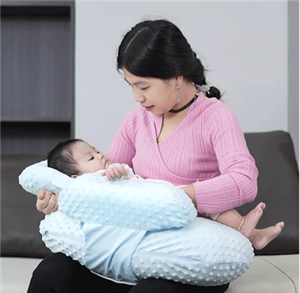
A nursing pillow that fails at 3 AM is more than an inconvenience—it’s a risk to infant health and a drain on resources. Zhongshan Cherry Daily Products Co., Ltd combines advanced materials, clinical evidence, and user-centric design to deliver a multifunctional nursing pillow that performs when it matters most. Ready to elevate your care standards? Download our technical whitepaper on pressure redistribution and antimicrobial performance, or contact our sales engineers for a consultation.