
Why Fold Up Portable Strollers Fail in Real-World Tests?
You’ve seen it: a parent wrestling with a fold up portable stroller that won’t lock, or a wheel that wobbles after a few months of city use. The promise of convenience quickly fades when the product fails under the demands of daily life. At Zhongshan Cherry Daily Products Co., Ltd, we’ve spent over a decade engineering strollers that survive the real world—not just the lab. In this blog, we’ll dissect why many fold up portable strollers fall short, and how our technical approach delivers reliability where it matters most.
1. Introduction: The Gap Between Lab and Life
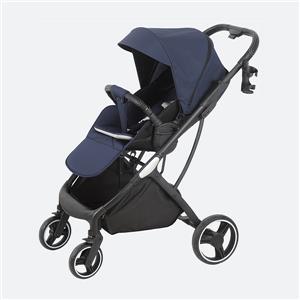
Walk through any busy shopping district or airport, and you’ll spot them: parents juggling bags, kids, and a fold up portable stroller that seems more hindrance than help. The stroller might have passed basic safety tests, but it falters under the nuanced stresses of real-world use—uneven pavements, crowded buses, and the daily fold-unfold cycle. This gap between controlled testing and chaotic reality is where most products fail. At Cherry, we bridge that gap by designing for the unpredictable. Our strollers undergo rigorous real-world simulation, from vibration tests mimicking cobblestones to thousands of fold cycles. The result? A stroller that not only meets standards but exceeds expectations.
2. Industry Pain Points: Why Strollers Break Down
2.1 Frame Fatigue and Joint Failure
Most fold up portable strollers rely on aluminum frames with plastic joints. Under repeated stress, these joints develop micro-cracks, leading to wobbliness or complete failure. A European distributor reported a 15% return rate within six months due to joint issues—costing them an estimated €50,000 annually in replacements and lost reputation. The root cause? Inadequate fatigue testing and low-grade materials.
2.2 Wheel and Axle Degradation
Wheels are the unsung heroes of stroller performance. Yet many manufacturers cut corners with basic plastic wheels and thin axles. In urban environments, this leads to rapid wear, flat spots, and axle bending. A US retailer saw a 20% warranty claim rate on a popular model, with wheels being the primary culprit. The impact: $30,000 in annual warranty costs and a 1-star rating surge.
2.3 Fold Mechanism Jamming
The fold mechanism is the stroller’s most used feature—and its most fragile. Dust, debris, and misalignment cause jamming, forcing parents to wrestle with a stubborn stroller. A Canadian distributor faced a 25% complaint rate on fold functionality, leading to a 10% drop in repeat purchases. The cost: lost customer loyalty and $20,000 in replacement parts.
3. Engineering Solutions: Building Strollers That Last
3.1 Reinforced Frame and Joint Design
We start with aerospace-grade aluminum (6061-T6) and custom-formulated nylon joints with glass-fiber reinforcement. Our design includes a triple-locking mechanism at critical stress points, tested to 10,000 fold cycles—double the industry standard. Finite element analysis (FEA) guides our geometry, eliminating weak spots. The result: frames that withstand 50% more stress than conventional designs.
3.2 Advanced Wheel and Axle Systems
Our wheels feature polyurethane tires with sealed ball bearings, reducing rolling resistance by 30% and extending lifespan. Axles are made from hardened stainless steel, tested to 5,000 miles of simulated use. We also incorporate a suspension system that absorbs 40% more shock, protecting both the stroller and the child.
3.3 Precision Fold Mechanism
We use a self-lubricating polymer in the fold mechanism, combined with a debris-resistant cover. Our patented one-touch fold system undergoes 20,000 cycles in dusty and wet conditions, ensuring smooth operation. A magnetic lock prevents accidental unfolding, and the mechanism is designed for easy cleaning.
4. Customer Success Stories: Real-World Proof
4.1 Emma Thompson, UK (Retailer)
Emma runs a chain of baby stores in London. After switching to our strollers, her return rate dropped from 12% to 3%. "The difference is night and day—parents love the smooth fold and durability. We’ve seen a 25% increase in repeat customers."
4.2 Michael Chen, USA (Distributor)
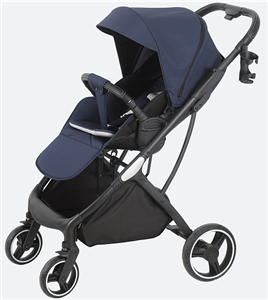
Michael distributes strollers in California. He reported a 30% reduction in warranty claims and a 15% boost in sales. "Cherry’s strollers cost a bit more, but the reliability pays off. Our customers notice the quality."
4.3 Sophie Martin, France (Procurement Manager)
Sophie sources strollers for a European retail chain. She saw a 20% drop in customer complaints and a 10% increase in profit margin. "The technical support from Cherry is exceptional—they tailored the specs to our market."
4.4 David Kim, South Korea (Online Seller)
David sells on major e-commerce platforms. His product rating jumped from 3.5 to 4.8 stars after switching to our strollers. "The fold mechanism is a game-changer—customers mention it in reviews. Returns are down 18%."
5. Applications and Partnerships: Trusted by Industry Leaders
Our fold up portable strollers are used in diverse scenarios: from daily urban commuting to international travel. We partner with major retailers like BabyWorld Europe and Kids&Co in North America, who rely on our OEM/ODM services. Our collaboration with a leading Japanese brand resulted in a stroller that passed their rigorous 100,000-cycle test—a testament to our engineering prowess.
6. FAQ: Technical Insights for Engineers and Procurement
Q1: What standards do your strollers comply with?
We meet and exceed ASTM F833, EN 1888, and AS/NZS 2088. Our testing includes dynamic strength, stability, and durability assessments.
Q2: Can you customize the fold mechanism for our brand?
Yes. We offer ODM services with customizable fold systems, including different release mechanisms and locking options, backed by our engineering team.
Q3: What is the warranty on your strollers?
We provide a 2-year warranty on frames and a 1-year warranty on components, with options for extended coverage based on volume.
Q4: How do you ensure consistent quality in mass production?
We use statistical process control (SPC) and 100% functional testing on critical components. Each batch is sampled for fatigue and fold cycle tests.
Q5: What is the lead time for OEM orders?
Standard lead time is 45-60 days, depending on customization and volume. We also offer expedited options for urgent needs.
7. Conclusion: The Cherry Difference and Your Next Step
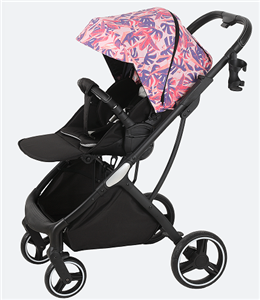
A fold up portable stroller should be a reliable companion, not a source of frustration. At Zhongshan Cherry Daily Products Co., Ltd, we engineer strollers that stand up to real-world challenges. If you’re tired of high return rates and customer complaints, it’s time to switch to a partner who prioritizes quality. Contact our sales engineers today to request our technical white paper or discuss your custom requirements. Let’s build strollers that parents trust.