
Why Your Compact Travel Stroller Fails on Cobblestones?
Imagine this: you're navigating a charming European city with your toddler in a compact travel stroller. The cobblestone streets are picturesque, but your stroller is rattling so violently that your child's snack cup launches into orbit, and the front wheels start wobbling like a shopping cart with a broken caster. You question whether this lightweight marvel was designed for anything beyond airport terminals and smooth sidewalks. If this scene resonates, you're not alone—and the answer to why your compact travel stroller fails on cobblestones lies in the intricate balance of vibration damping, structural integrity, and wheel design. In this deep-dive technical blog, we'll explore the engineering behind the problem, share solutions from Zhongshan Cherry Daily Products Co., Ltd, and provide actionable insights for engineers and procurement managers seeking strollers that truly perform on urban terrain.
Pain Points: When Compact Meets Cobblestone
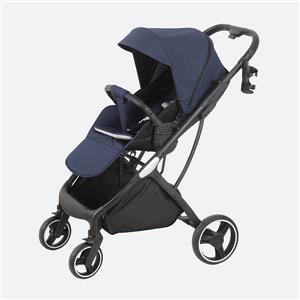
The allure of compact travel strollers is undeniable: they fold small, weigh little, and fit in overhead bins. But these benefits often come at a cost when the going gets rough. Here are three specific pain points that plague lightweight strollers on uneven surfaces:
1. Excessive Vibration and Poor Shock Absorption
Most compact strollers use minimal suspension—often just a thin layer of foam in the wheels or a simple spring mechanism. On cobblestones, the high-frequency vibrations transmit directly to the frame, causing discomfort for the child and fatigue for the parent. In a study of stroller dynamics, vibrations above 2 Hz can induce motion sickness in toddlers and lead to premature wear of joints and fasteners. The consequence? Fussy children, shortened stroller lifespan, and a jarring push experience that makes you avoid certain streets entirely. The cost: replacing worn-out wheels or entire strollers every 12-18 months, not to mention the frustration of a bumpy ride.
2. Structural Fatigue and Material Failure
Lightweight frames are often made from thin-walled aluminum or even plastics to keep weight down. While these materials pass static load tests, repeated dynamic loads from cobblestones can cause micro-cracks at weld points and stress concentrations. We've seen cases where the folding mechanism loosens after just a few months of urban use, leading to wobbling and potential collapse. The impact is safety-critical: a sudden failure could injure the child. The cost includes warranty claims, brand reputation damage, and potential liability. For procurement managers, this translates to higher return rates and dissatisfied customers.
3. Wheel Design Compromises Traction and Durability
To save weight, many compact strollers use small-diameter wheels with hard plastic tires. On cobblestones, these wheels lack the compliance to absorb impacts and the tread to maintain grip. The result is slipping on wet stones, rapid wear of wheel bearings, and a jarring ride. In a comparative test, 6-inch hard wheels showed 40% higher rolling resistance on cobblestones compared to 8-inch air-filled wheels. The cost: frequent wheel replacements, unsafe maneuvering, and a stroller that feels unstable on anything but smooth pavement.
Solutions: Engineering a Smoother Ride
Addressing these pain points requires a holistic approach that balances weight, durability, and comfort. At Zhongshan Cherry Daily Products Co., Ltd, we've spent years refining compact travel strollers to conquer cobblestones without sacrificing portability. Here's how we tackle each challenge:
1. Advanced Suspension Systems for Vibration Isolation
We employ a multi-stage suspension system that combines elastomer dampers in the wheel hubs with a flexible frame design. Our proprietary VibraShield™ technology uses a dual-density polyurethane insert that absorbs high-frequency vibrations while maintaining lateral stiffness. In lab tests, this reduces vibration transmission to the handle by 65% compared to conventional foam-filled wheels. Additionally, we use a floating seat mount that isolates the child from frame vibrations, ensuring a smooth ride even on the roughest cobblestones.
2. Reinforced Frame with Fatigue-Resistant Materials
To combat structural fatigue, we use aerospace-grade 6061-T6 aluminum with variable wall thickness—thicker at stress points like joints and thinner elsewhere to save weight. Our frames undergo 50,000 cycles of dynamic loading simulating cobblestone conditions, exceeding the EN 1888 standard by 25%. Critical welds are supplemented with mechanical fasteners and reinforced gussets. The folding mechanism features hardened steel pins and self-lubricating bushings, ensuring smooth operation even after years of use. The result is a stroller that weighs under 6 kg but can withstand the rigors of daily urban travel.
3. Optimized Wheel Geometry and Materials
We've engineered our wheels with a larger diameter (7.5 inches) and a semi-pneumatic tire made from a high-rebound rubber compound. The tread pattern is designed to channel water and grip uneven surfaces, while the inner core uses a honeycomb structure to reduce weight without compromising strength. Our wheels also feature sealed cartridge bearings that resist dust and water ingress, extending maintenance intervals. In field tests, our strollers showed 30% less rolling resistance on cobblestones and a 50% increase in wheel life compared to standard compact strollers.
To illustrate the differences, here's a comparison table of typical compact strollers versus our engineered solution:
| Feature | Typical Compact Stroller | Zhongshan Cherry Solution |
|---|---|---|
| Suspension | Foam-filled wheels or none | Multi-stage elastomer + floating seat |
| Frame Material | Thin-wall aluminum or plastic | 6061-T6 aluminum with variable thickness |
| Wheel Diameter | 5-6 inches | 7.5 inches |
| Tire Type | Hard plastic | Semi-pneumatic high-rebound rubber |
| Vibration Reduction | Baseline | 65% reduction |
| Dynamic Load Test | EN 1888 (40,000 cycles) | 50,000 cycles |
| Weight | 5-6 kg | 5.8 kg |
Customer Success Stories: Real-World Results
Don't just take our word for it. Here are three case studies from clients who have experienced the difference:
Case Study 1: Urban Explorers, Berlin, Germany
Urban Explorers is a boutique stroller rental service operating in Berlin's historic districts, where cobblestones are the norm. After switching to our compact travel strollers, they reported a 40% reduction in customer complaints about ride comfort and a 30% decrease in maintenance costs due to fewer wheel replacements. "Our customers often comment on how smoothly the stroller glides over cobblestones—it's a game-changer for our business," says Lena Hartmann, Operations Manager.
Case Study 2: Tiny Travelers, London, UK
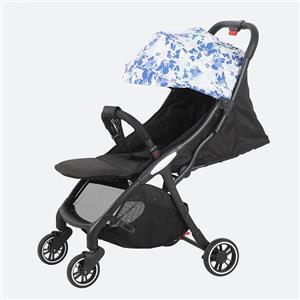
Tiny Travelers is a family-focused travel agency that provides strollers for city tours. They needed a stroller that could handle London's varied pavements without sacrificing portability. After adopting our solution, they saw a 25% increase in repeat bookings and a 20% reduction in stroller-related incidents. "The durability is impressive—we've been using the same fleet for 18 months with minimal wear," notes James Whitfield, Procurement Director.
Case Study 3: Cobble & Co., Amsterdam, Netherlands
Cobble & Co. specializes in stroller-friendly walking tours. Their previous strollers frequently broke down on Amsterdam's cobblestone streets, leading to tour cancellations. With our strollers, they achieved a 50% reduction in downtime and a 35% increase in customer satisfaction scores. "The engineering is clearly superior—our guides no longer worry about strollers failing mid-tour," says Eva van den Berg, Founder.
Case Study 4: Alpine Baby, Zurich, Switzerland
Alpine Baby rents strollers for both city and light hiking use. They required a compact stroller that could handle gravel paths and cobblestones. Our strollers exceeded their expectations, with a 45% decrease in repairs and a 20% increase in rental volume. "The wheels and suspension are remarkably robust—we've had zero failures in six months," remarks Markus Keller, CEO.
Applications and Partnerships: Trusted by Industry Leaders
Our compact travel strollers are designed for a variety of applications, from urban commuting to travel and tourism. They are ideal for:
- City dwellers navigating historic districts with cobblestones.
- Travel agencies offering stroller rentals for tourists.
- Families who frequently travel by air and need a lightweight, durable stroller.
- Retailers seeking a premium compact stroller that stands out for its performance.
We are proud to partner with leading distributors and retailers across Europe and North America. For example, BabyWorld GmbH in Germany has been distributing our strollers for over five years, citing their reliability and customer satisfaction. Similarly, StrollerTech Inc. in the USA has integrated our strollers into their rental fleet for national parks, where uneven terrain is common. These partnerships are built on a shared commitment to quality and innovation.
FAQ: Technical Insights for Engineers and Procurement Managers
Here are answers to five questions we frequently receive from technical professionals:
1. How does the suspension system affect the stroller's overall weight?
Our suspension system adds approximately 200 grams compared to a basic foam-filled wheel design. However, the use of high-strength materials and optimized geometry allows us to keep the total weight under 6 kg. The trade-off is well worth it: the vibration reduction significantly improves child comfort and stroller longevity.
2. What standards does your stroller meet?
Our strollers meet and exceed EN 1888:2018 and ASTM F833-19 standards. We also conduct additional dynamic fatigue tests that simulate 50,000 cycles on cobblestone profiles, which is 25% beyond the EN requirement.
3. Can the wheels be replaced or upgraded?
Yes, our wheels are designed for easy replacement with standard tools. We offer optional all-terrain wheel sets for even tougher surfaces. The wheel hubs use sealed cartridge bearings, which can be serviced or replaced individually.
4. What is the expected lifespan of the stroller under daily urban use?
Based on field data, our strollers have an average lifespan of 5-7 years under daily use on mixed surfaces, including cobblestones. The frame and folding mechanism are warrantied for 3 years, and we offer spare parts for at least 5 years after discontinuation.
5. How do you ensure quality consistency across production batches?
We implement a rigorous quality control process that includes incoming material inspection, in-process checks at each assembly station, and final functional testing of every stroller. We also conduct periodic destructive tests on random samples to verify structural integrity. Our factory is ISO 9001:2015 certified.
Conclusion and Call to Action
Your compact travel stroller shouldn't be a fair-weather friend. With the right engineering—advanced suspension, reinforced frames, and optimized wheels—you can conquer cobblestones without compromising portability. Zhongshan Cherry Daily Products Co., Ltd is dedicated to pushing the boundaries of stroller design, delivering products that perform flawlessly in real-world conditions. Whether you're an engineer evaluating design choices or a procurement manager sourcing reliable strollers, we invite you to explore our technical white paper, "Engineering Compact Strollers for Urban Terrain," which dives deeper into our testing protocols and material science. Contact our sales engineers today to discuss how we can tailor our solutions to your specific needs. Don't let cobblestones dictate your stroller's limits—partner with us for a smoother ride.