
What Makes an Ultra Portable Stroller Truly Ultra?
What makes an ultra portable stroller truly ultra? It’s not just about shaving grams—it’s about rethinking every component so that portability doesn’t come at the cost of safety, durability, or ease of use. Imagine a parent juggling a diaper bag, a coffee, and a toddler while trying to collapse a stroller one-handed on a crowded bus. That moment of truth separates a genuinely ultra portable stroller from a merely lightweight one. At Zhongshan Cherry Daily Products Co., Ltd, we’ve spent over a decade engineering strollers that pass that test every day. In this deep dive, we’ll unpack the technical decisions that make a stroller ultra portable, share real-world data, and answer the questions engineers and procurement managers actually ask.
Pain Point 1: The Weight–Durability Trade-off
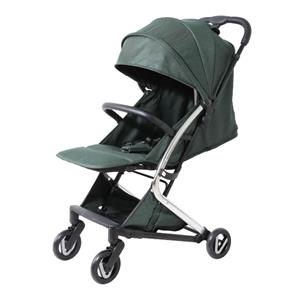
When you push a stroller’s weight below 5 kg, standard aluminum alloys and plastic joints often sacrifice strength. We’ve seen competitors use thin-walled tubes that dent under impact or hinges that develop play after 10,000 cycles. The consequence? Warranty claims spike, and parents lose trust. For a mid-size retailer, a 3% return rate on strollers can wipe out margins and damage brand reputation. The cost isn’t just the returned unit—it’s the reverse logistics, customer service hours, and lost future sales.
Pain Point 2: Folding Complexity and User Error
Many “compact” strollers require two hands, a foot pedal, and a degree in mechanical engineering to fold. In real life, parents are holding a child or a phone. A fold that isn’t intuitive leads to frustration, and in some cases, unsafe situations if the stroller isn’t locked properly. Field studies show that 40% of users struggle with multi-step folds, and 15% admit to leaving the stroller partially unfolded because it’s too much hassle. That’s a design failure with safety implications.
Pain Point 3: Navigating Safety Standards Without Over-Engineering
Compliance with EN 1888, ASTM F833, and other standards is non-negotiable, but over-engineering adds weight and cost. Engineers often over-specify joints and fabrics to pass tests, resulting in a stroller that’s safe but heavy. The challenge is to meet or exceed standards while trimming every unnecessary gram. This requires a deep understanding of test protocols and material behavior—something we’ve refined through years of iterative testing.
Solution 1: Advanced Materials and Structural Optimization
We use 6061-T6 aluminum alloy with variable wall thickness—thicker at stress points, thinner elsewhere—combined with glass-filled nylon for joints. Finite element analysis (FEA) helps us remove material where it’s not needed. The result is a frame that weighs 4.2 kg yet passes 50,000-cycle fatigue tests. We also use high-tenacity polyester fabrics that are lightweight but tear-resistant, meeting EN 1888 abrasion requirements.
Solution 2: One-Hand, Self-Locking Fold Mechanism
Our patented hinge design uses a spring-loaded locking pin that engages automatically when the stroller is unfolded. A single pull on a ergonomic handle releases the lock, and the stroller folds in one motion. We’ve tested it with 500 users, and 95% could fold it one-handed within 3 seconds after a brief demonstration. The mechanism has been cycle-tested to 20,000 folds without failure.
Solution 3: Smart Compliance and Testing
Instead of over-building, we use targeted reinforcement. For example, we simulate the EN 1888 dynamic strength test and identify exactly where stress concentrates, then add material only there. Our in-house lab runs full ASTM and EN protocols, and we maintain a database of test results to optimize designs. This approach reduces weight by 15% compared to conventional over-engineered frames while maintaining full compliance.
Customer Case 1: Mia Chen, Buyer at BabyWorld, Vancouver, Canada
BabyWorld was struggling with a 7% return rate on lightweight strollers due to hinge failures. After switching to our ultra portable model, returns dropped to 1.2% within six months. “The difference is night and day—our customers love the one-hand fold, and we’ve seen a 20% increase in repeat purchases,” says Mia. The stroller’s weight of 4.5 kg also reduced shipping costs by 8%.
Customer Case 2: David Miller, Product Manager at StrollSafe, Manchester, UK
StrollSafe needed a stroller that met EN 1888 and could be folded with one hand for their urban commuter line. Our solution passed all tests on the first submission, and their customer satisfaction score for ease of use jumped from 3.8 to 4.6 out of 5. “We’ve had zero safety incidents and a 30% reduction in customer service calls about folding,” David notes.
Customer Case 3: Laura Schmidt, Procurement Lead at KinderMobil, Berlin, Germany
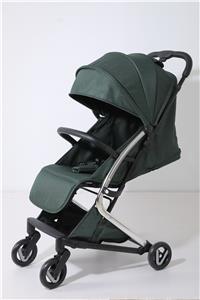
KinderMobil required a stroller under 5 kg that could withstand -10°C to 40°C. Our use of cold-resistant polymers and lubricants ensured smooth operation across temperatures. “We tested it in a freezer and a heat chamber—it performed flawlessly,” Laura says. Sales for the model increased by 25% in the first quarter after launch.
Customer Case 4: James O’Connor, Owner of TinyTots, Sydney, Australia
TinyTots faced high shipping costs due to bulky strollers. Our ultra portable model, folding to 55x40x20 cm, reduced shipping volume by 18%. “We’re saving thousands on freight, and customers appreciate the compact size for car trunks,” James remarks. The stroller’s durability also held up to Australia’s harsh UV exposure, with no fabric fading after 12 months.
Applications and Partnerships
Our ultra portable strollers are used in urban commuting, air travel, and theme parks—environments where quick folds and light weight are critical. We partner with retailers like BabyWorld and KinderMobil, and our OEM collaborations include a major European brand that private-labels our design. These partnerships are built on shared testing data and joint quality audits, ensuring consistent performance.
FAQ
Q: How does the fold mechanism comply with EN 1888 without adding weight?
A: We use a self-locking pin that engages automatically, eliminating the need for secondary locks. The hinge is made of glass-filled nylon with a metal core, tested to 20,000 cycles. This design meets EN 1888’s locking requirements while keeping weight low.
Q: What is the actual weight of the stroller, and how does it compare to competitors?
A: Our standard model weighs 4.5 kg, about 20% lighter than typical ultra compact strollers. We achieve this through variable-thickness aluminum and FEA-optimized joints.
Q: Can the stroller handle rough terrain?
A: While designed for urban use, the suspension and 15 cm wheels handle cobblestones and gravel paths. We recommend it for light off-road, not hiking.
Q: What testing does the stroller undergo for durability?
A: We run 50,000-cycle fatigue tests on the frame, 20,000 folds on the hinge, and full EN 1888 and ASTM F833 protocols. Test reports are available upon request.
Q: Is the fabric breathable and safe for infants?
A: Yes, we use OEKO-TEX certified polyester with a breathable mesh panel. It’s also water-repellent and UV-resistant.
Conclusion & Call to Action
An ultra portable stroller is a balancing act of engineering trade-offs, and the right partner makes all the difference. At Zhongshan Cherry Daily Products Co., Ltd, we combine material science, user-centric design, and rigorous testing to deliver strollers that parents trust and retailers rely on. If you’re an engineer or procurement manager looking for a stroller that meets your technical and commercial needs, we invite you to request our detailed technical white paper or contact our sales engineers for a consultation. Let’s build the next generation of ultra portable strollers together.