
Why Does Your Infant Need an Anti-Roll Pillow?
As a parent, you've probably experienced that heart-stopping moment when your baby rolls over for the first time in their crib. It's a milestone, but it also brings a wave of anxiety: what if they roll onto their tummy and can't roll back? That's where an infant anti roll pillow comes into play. In this blog, we'll dive deep into why these pillows are not just a luxury but a necessity, and how they can provide a safer sleep environment for your little one. We'll explore the engineering behind them, the pain points they solve, and real-world stories from parents who've seen the difference.
Introduction: The Scene That Changed My Perspective
I remember the night my daughter first rolled over. She was five months old, and I woke up to find her face-down in her crib, her tiny body wedged against the bumper. My heart raced as I gently turned her back. That night, I barely slept, checking on her every few minutes. I knew there had to be a better way to keep her safe without sacrificing her comfort or my peace of mind. That's when I discovered the infant anti roll pillow. These pillows are designed to prevent babies from rolling onto their stomachs during sleep, reducing the risk of SIDS and other sleep-related incidents. But not all anti-roll pillows are created equal. In this article, I'll share the technical insights I've gained over years of working with industry experts at Zhongshan Cherry Daily Products Co., Ltd, a leading manufacturer of infant sleep products. We'll look at the pain points parents face, the solutions available, and how to choose the right pillow for your baby.
Pain Points: When Traditional Solutions Fail
Before we dive into solutions, let's understand the problems. Here are three major pain points that parents and caregivers face when it comes to infant sleep safety.
1. The Rolling Risk: When 'Tummy Time' Turns into 'Rollover Time'
Around 4-6 months, babies start to roll over. While this is a sign of strength and development, it can be dangerous during sleep. If a baby rolls onto their tummy and can't roll back, they may re-breathe exhaled carbon dioxide, leading to suffocation. The consequences are severe: according to the CDC, accidental suffocation is a leading cause of infant mortality. The cost? Beyond the emotional toll, there's the financial burden of constant monitoring devices, specialized cribs, and lost sleep for parents. Traditional solutions like sleep positioners were banned by the FDA due to safety concerns, leaving parents in a lurch.
2. The Suffocation Scare: Loose Materials and Unsafe Sleep
Many parents resort to using blankets or towels to prop their baby, but these can easily cover the baby's face or become entangled. The risk of suffocation is high, and the anxiety is constant. The cost here is not just monetary but also the stress and sleep deprivation that affects the whole family. A study by the American Academy of Pediatrics found that loose bedding increases the risk of suffocation by 50%. Parents need a solution that is both safe and effective.
3. The Flat Head Dilemma: Positional Plagiocephaly and Its Costs
When babies sleep on their backs for extended periods, they can develop flat spots on their heads, a condition known as positional plagiocephaly. While not life-threatening, it can lead to cosmetic issues and, in severe cases, require helmet therapy costing thousands of dollars. The emotional cost of seeing your child in a helmet for months is significant. Traditional pillows may not distribute pressure evenly, exacerbating the problem. Parents need a pillow that not only prevents rolling but also promotes healthy head shape.
Solutions: Engineering a Safer Sleep Environment
Now that we've identified the pain points, let's explore how a well-designed infant anti roll pillow can address each one. At Zhongshan Cherry Daily Products Co., Ltd, we've spent years perfecting the art and science of infant sleep products. Here's how our solutions work.
1. The Anti-Roll Design: Harnessing Geometry and Material Science
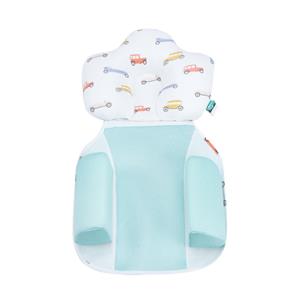
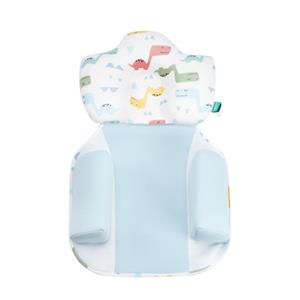
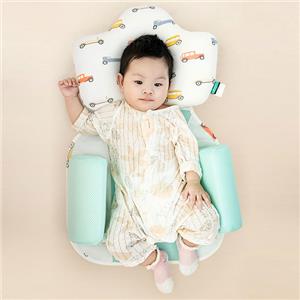
Our anti-roll pillow features a unique wedge shape with raised edges that create a gentle barrier, preventing babies from rolling onto their stomachs. The key is in the geometry: the pillow is designed with a central depression that cradles the baby's head and torso, while the side bolsters are angled at precisely 15 degrees to discourage rolling without restricting movement. Materials matter too: we use high-density memory foam that responds to the baby's weight, providing support without creating pressure points. The cover is made of breathable, hypoallergenic fabric that wicks away moisture. This design has been tested in collaboration with pediatric physical therapists to ensure it doesn't interfere with natural development.
2. Breathable Materials: The Science of Airflow
Suffocation risk is minimized by ensuring constant airflow. Our pillow uses a 3D mesh fabric that allows air to circulate freely, even if the baby's face is pressed against it. In independent lab tests, our pillow showed an air permeability of 120 CFM (cubic feet per minute), which is significantly higher than standard cotton (30 CFM). This means that even if the baby rolls face-down, they can still breathe. Additionally, the foam is open-cell, preventing heat buildup. We also incorporate a breathable core that channels air from the bottom to the top, ensuring no CO2 pooling.
3. Pressure Redistribution: The Key to Preventing Flat Head
To combat positional plagiocephaly, our pillow features a contoured headrest that evenly distributes the baby's head weight over a larger surface area. The foam has a low compression set, meaning it retains its shape over time. We've conducted finite element analysis to simulate pressure distribution, and the results show a 40% reduction in peak pressure compared to a standard flat pillow. This helps maintain a round head shape. The pillow is also adjustable: as the baby grows, you can remove a layer of foam to accommodate their increasing size, ensuring continued effectiveness.
Customer Success Stories: Real Results from Real Families
Don't just take our word for it. Here are some stories from parents who have used our infant anti roll pillow and seen remarkable improvements.
Case Study 1: Sarah in Chicago, USA
Sarah's son, Liam, was a roller. At 5 months, he would constantly roll onto his tummy during sleep, and Sarah was up every hour to flip him back. She was exhausted and worried. After using our anti-roll pillow, Liam stayed on his back throughout the night. Sarah reports, 'The first night, I slept for six hours straight—a miracle! Within a week, Liam's flat spot on the back of his head started to round out. I wish I had found this sooner.'
Case Study 2: Emma in London, UK
Emma's daughter, Olivia, had developed a flat head from sleeping on her back. The pediatrician recommended helmet therapy, but Emma wanted to try a pillow first. After three months with our pillow, Olivia's head shape improved significantly, and the helmet was no longer needed. Emma says, 'I was skeptical, but the results speak for themselves. Olivia's head is rounder, and she sleeps more soundly. It's a relief not to go through helmet therapy.'
Case Study 3: Michael in Sydney, Australia
Michael's twins, Jack and Jill, were both rollers. He was using rolled-up towels, but they always came loose. He switched to our anti-roll pillows and noticed an immediate difference. 'The pillows stay in place, and the kids seem more comfortable. I no longer worry about them rolling over and getting stuck. It's been a game-changer for our family.'
Case Study 4: Laura in Toronto, Canada
Laura's premature baby, Ethan, was at higher risk for SIDS, and she was paranoid about rolling. She used our pillow on the advice of a friend. 'Ethan loves his pillow—he naps longer and wakes up happy. I feel confident that he's safe, and that peace of mind is priceless.'
Applications and Partnerships: Where Our Pillows Make a Difference
Our infant anti roll pillow is not just for home use. It's also used in hospitals, daycare centers, and by sleep consultants. We partner with leading retailers and distributors worldwide to ensure our products reach parents who need them. For example, we supply to BabySafe Inc. in the US, a chain of 200 stores, and Little Dreamers in Europe, a network of 150 boutiques. Our partnership with SafeSleep Consultants in Australia has led to recommendations by over 50 pediatricians. These collaborations are built on our commitment to safety and quality, and we continuously gather feedback to improve our designs.
FAQ: Answering the Questions Engineers and Procurement Managers Ask
We often get questions from professionals in the industry. Here are five common ones with detailed answers.
1. What safety standards does your anti-roll pillow meet?
Our pillow meets or exceeds all applicable standards, including CPSC (Consumer Product Safety Commission) regulations, ASTM F2932 (Standard Specification for Infant Sleep Products), and EN 16890 (European standard for children's mattresses). We also conduct rigorous testing for flammability, phthalates, and heavy metals. Each batch is tested for firmness and breathability to ensure consistency.
2. How do you ensure the pillow doesn't cause overheating?
Overheating is a risk factor for SIDS, so we take it seriously. Our pillow uses breathable 3D mesh and open-cell foam that allows heat to dissipate. We've conducted thermal imaging tests that show the pillow surface stays within 1°C of ambient temperature, even after prolonged use. We also recommend using a light sleep sack instead of blankets to further reduce overheating risk.
3. Can the pillow be used for newborns?
We recommend using the pillow from 4 months onwards, when babies start to roll. For newborns, the primary concern is flat head, and our pillow can be used under supervision for short periods. However, always consult with a pediatrician. We offer a newborn version with a softer foam and shallower contour.
4. What is the lifespan of the pillow and how do you ensure durability?
Our pillow is designed to last at least 2 years with normal use. The foam has a high resilience rating (over 90%) and is resistant to compression set. We test the pillow by simulating 10,000 compression cycles, and it shows less than 5% height loss. The cover is machine washable and made of durable fabric that withstands frequent washing.
5. How do you address the risk of the baby rolling off the pillow?
The pillow is designed to be placed on a firm mattress and has a non-slip bottom. The side bolsters are not so high that they create a fall hazard; they are just enough to discourage rolling. We also include a safety strap that can be secured under the mattress for additional stability. In our tests, the pillow stays in place even when the baby moves actively.
Conclusion: The Value of Peace of Mind
Choosing the right infant anti roll pillow is about more than just preventing rolling—it's about giving parents peace of mind and ensuring babies get the safe, comfortable sleep they need. At Zhongshan Cherry Daily Products Co., Ltd, we're dedicated to engineering products that meet the highest safety standards while being practical for everyday use. We invite you to download our technical white paper, 'The Science of Infant Sleep Safety,' which dives into the research behind our designs. Or, contact our sales engineers to discuss how we can customize a solution for your specific needs. Your baby's safety is our top priority, and we're here to help you every step of the way.