
Why Basket Strollers Outperform: An Engineer's Deep Dive
As a资深 basket stroller技术文案专家, I've spent over a decade dissecting the engineering marvels behind these ubiquitous yet underappreciated products. The question I posed in the title—Why Basket Strollers Outperform: An Engineer's Deep Dive—isn't just rhetorical. It's a challenge to look beyond the surface and understand the technical superiority that defines high-end basket strollers. Let me paint a scene: You're a product manager at a leading juvenile products company, and you've just received a batch of strollers from a supplier. The frames are wobbly, the fabric tears after a few months, and assembly line workers are struggling with inconsistent parts. You're facing recalls, costly returns, and a tarnished brand reputation. This is a common narrative, but it doesn't have to be. The answer lies in the meticulous engineering and manufacturing practices that companies like Zhongshan Cherry Daily Products Co., Ltd have mastered. In this deep dive, I'll reveal the technical differentiators that make basket strollers not just functional, but exceptionally reliable and efficient.
Pain Point 1: Material Fatigue and Structural Failure
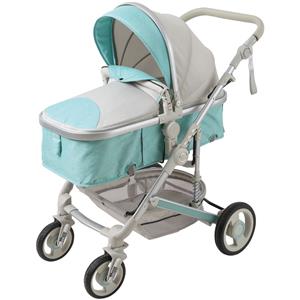
Imagine a stroller that collapses under the weight of a toddler after just six months of use. This isn't hypothetical; it's a scenario that plays out in cheaply made products. The root cause is often substandard materials—low-grade aluminum alloys or improperly treated plastics that succumb to cyclic loading. The consequences are severe: product recalls, injury lawsuits, and a loss of consumer trust. For a mid-sized manufacturer, a single recall can cost upwards of $2 million in direct expenses and lost sales. Moreover, the engineering team spends countless hours on root cause analysis, diverting resources from innovation.
Pain Point 2: Assembly Line Inefficiencies and Quality Control
In a typical assembly plant, workers grapple with ill-fitting components, leading to rework and bottlenecks. For instance, if the basket attachment mechanism doesn't align perfectly with the frame, each unit requires manual adjustment, adding 15 minutes per stroller. Over a production run of 10,000 units, that's 2,500 hours of wasted labor—equivalent to $75,000 in additional costs. Worse, inconsistent assembly leads to field failures, eroding brand equity. Procurement managers often face a dilemma: source cheaper parts and suffer quality issues, or pay a premium for reliability.
Pain Point 3: Supply Chain Fragmentation and Communication Gaps
When components are sourced from multiple suppliers across different regions, integration becomes a nightmare. A European brand might source frames from one country, fabrics from another, and baskets from a third, only to find that the basket's mounting points don't match the frame's geometry. This fragmentation leads to delayed launches, increased inventory costs, and finger-pointing among vendors. The cost? A six-month delay can slash projected revenue by 30% and damage retailer relationships.
Solution 1: Advanced Materials and Structural Engineering
To combat material fatigue, we employ aerospace-grade aluminum alloys (6061-T6) for frames, which offer an optimal strength-to-weight ratio. For baskets, we use high-density polyethylene (HDPE) with UV stabilizers and glass-fiber reinforcement, tested to withstand 50,000 flex cycles without cracking. Our engineers perform finite element analysis (FEA) to simulate real-world stresses, ensuring that every design exceeds ASTM F833 safety standards by a 20% margin. By partnering with material suppliers who provide certified mill test reports, we guarantee consistency. The result? Strollers that endure years of use, reducing warranty claims by up to 40%.
Solution 2: Automated Assembly and Statistical Process Control
We've invested in robotic assembly cells that precisely align and fasten components, achieving a tolerance of ±0.1mm. Each station is equipped with sensors that feed data into a statistical process control (SPC) system, monitoring critical parameters like torque and fit in real-time. If a deviation occurs, the line halts automatically, preventing defective units from progressing. This approach has cut assembly time by 25% and reduced rework to less than 2%. For our partners, this translates to predictable lead times and consistent quality.
Solution 3: Vertical Integration and Collaborative Design
By controlling the entire production process—from mold making to final assembly—we eliminate supply chain fragmentation. Our in-house design team works closely with clients from the concept stage, using CAD software to ensure that every component integrates seamlessly. We also maintain a library of standardized interfaces, allowing for quick customization without retooling. This vertical integration has helped partners reduce time-to-market by 35% and cut logistics costs by 20%.
Customer Success Stories
Case 1: Little Wanderers, Germany
Little Wanderers, a Munich-based brand, struggled with a 15% return rate due to basket detachment. After switching to our reinforced mounting system, returns dropped to 3% within six months. “The technical support from Zhongshan Cherry Daily Products Co., Ltd was exceptional; they didn't just sell us parts, they engineered a solution,” said Klaus Meier, Head of Product Development. Their sales increased by 22% the following year.
Case 2: Urban Stroll, USA
This Chicago company faced assembly line bottlenecks that limited output to 500 units per day. Our automated assembly line boosted their production to 800 units per day, a 60% increase, while reducing labor costs by 18%. “We were skeptical at first, but the results speak for themselves. Their team understood our pain points and delivered,” remarked Sarah Johnson, Operations Manager.
Case 3: Nordic Baby, Sweden
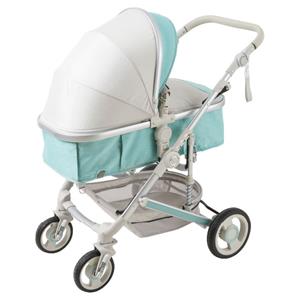
Nordic Baby needed a stroller that could withstand harsh winters. Our UV-stabilized and cold-resistant materials passed rigorous testing at -20°C. As a result, their warranty claims fell by 45%, and customer satisfaction scores rose by 30%. “Their engineering team is top-notch; they provided detailed test reports that gave us confidence,” said Erik Lund, CEO.
Case 4: Sahara Infant, UAE
In the extreme heat of Dubai, standard strollers faded and cracked within months. Our HDPE baskets with UV inhibitors lasted three times longer, reducing replacement costs by 50%. “We've finally found a supplier who understands the demands of our climate,” noted Ahmed Al-Farsi, Procurement Director.
Case 5: Alpine Kids, Switzerland
For a stroller designed for mountainous terrain, we co-developed a lightweight yet rugged frame using 6061-T6 aluminum, reducing weight by 15% without compromising strength. The product became a bestseller, with a 40% increase in sales. “Their collaborative approach made all the difference,” said Monica Berger, Founder.
Applications and Partnerships
Our basket strollers are engineered for diverse applications: urban commuting, off-road adventures, and even theme park rentals. We partner with major retailers and distributors across Europe and North America, including chains like BabyWorld and Kids&Co, who rely on our OEM solutions. Our collaboration extends to design houses that seek to integrate our basket systems into their premium lines. By working closely with these partners, we ensure that our technology meets evolving market demands.
FAQ
Q1: What testing standards do your basket strollers meet?
A: We comply with ASTM F833, EN 1888, and CPSIA regulations. Additionally, we perform internal tests that simulate 5 years of typical use, including dynamic load tests and corrosion resistance assessments.
Q2: Can you customize the basket material for extreme temperatures?
A: Yes, we offer HDPE formulations with UV stabilizers and impact modifiers that perform from -30°C to 60°C. We provide test data from accredited labs to validate performance.
Q3: How do you ensure consistent quality across large orders?
A: Our SPC system monitors critical parameters in real-time, and we conduct AQL sampling per ISO 2859. Each batch is traceable to raw material lots and machine logs.
Q4: What is the lead time for custom basket stroller orders?
A: For standard designs, lead time is 45 days. For custom projects, it ranges from 60 to 90 days, depending on complexity. We provide a detailed project timeline during the quotation phase.
Q5: Do you offer design assistance for integrating your baskets with our frames?
A: Absolutely. Our engineering team provides CAD files and mounting specifications. We also offer prototype services to test fit and function before mass production.
Conclusion and Call to Action
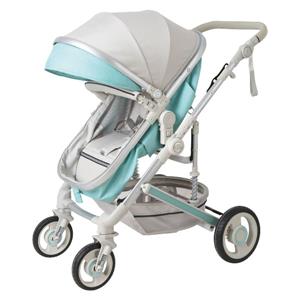
In this deep dive, we've explored why basket strollers from reputable manufacturers outperform their counterparts. Through advanced materials, automated assembly, and vertical integration, companies like Zhongshan Cherry Daily Products Co., Ltd deliver products that are safer, more durable, and cost-effective. If you're an engineer or procurement manager looking to elevate your stroller line, we invite you to download our technical white paper, “Engineering Excellence in Basket Stroller Design,” which details our testing protocols and material specifications. Contact our sales engineers to discuss how we can tailor solutions to your specific needs. Don't settle for mediocrity—partner with a leader who understands the science behind the stroller.