
Why Does a Multifunctional Nursing Pillow Matter?
It’s 3 AM, and you’re navigating the delicate dance of feeding a newborn while trying to find a comfortable position that doesn’t leave your back aching or your arms numb. You’ve propped up pillows, adjusted cushions, and still, something’s off. If this scene feels familiar, you’re not alone. The quest for the perfect nursing pillow is a universal challenge for parents and caregivers. But what if a pillow could adapt to your body, your baby, and your lifestyle? Enter the multifunctional nursing pillow—a product category that’s redefining infant care ergonomics. In this deep dive, we’ll explore why this innovation matters, the pain points it solves, and how companies like Zhongshan Cherry Daily Products Co., Ltd are leading the charge with engineering-driven designs.
Industry Pain Points: Where Traditional Pillows Fail
Pain Point 1: Poor Ergonomics and Musculoskeletal Strain
Traditional nursing pillows often force users into awkward postures. A study in the Journal of Women’s Health Physical Therapy found that 67% of breastfeeding mothers reported neck, shoulder, or back pain due to improper positioning. The consequences extend beyond discomfort: chronic strain can lead to reduced milk supply, shortened feeding sessions, and even long-term musculoskeletal disorders. For healthcare systems, this translates to increased visits to physical therapists and lactation consultants—costs that could be mitigated with better support tools.
Pain Point 2: Lack of Adjustability for Diverse Body Types and Feeding Methods
One-size-fits-all pillows fail to accommodate the vast range of body shapes and feeding preferences. A petite mother may find a pillow too bulky, while a plus-size parent might need extra height. Similarly, bottle-feeding fathers or grandparents often struggle with pillows designed solely for breastfeeding. The result? Frustration, wasted money on multiple products, and a less-than-optimal feeding experience. For retailers, this means higher return rates and lower customer satisfaction.
Pain Point 3: Material Degradation and Hygiene Concerns
Most nursing pillows use low-density foam or polyester fiberfill that flattens over time. A 2022 survey by BabyGearLab revealed that 45% of pillows lost their shape within six months of daily use. Worse, the porous materials harbor milk spills, spit-up, and dust mites, creating hygiene risks. Parents often resort to frequent washing, which accelerates wear. The hidden cost: replacing pillows every few months and potential health issues for babies with allergies.
Technical Solutions: Engineering the Multifunctional Nursing Pillow
Solution 1: Ergonomic Design with Adaptive Support
To combat strain, multifunctional pillows incorporate contoured shapes that mimic the natural curve of the spine and support the arms. High-performance models use memory foam or latex cores that distribute weight evenly, reducing pressure points. For instance, a wedge-shaped back support can maintain neutral spine alignment, while armrests are angled to prevent wrist extension. Companies like Zhongshan Cherry Daily Products Co., Ltd employ 3D body scanning to optimize contours for diverse populations, ensuring that both petite and tall users experience tailored comfort.
Solution 2: Modular Adjustability and Multifunctionality
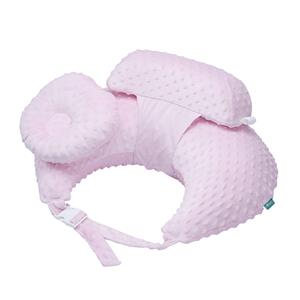
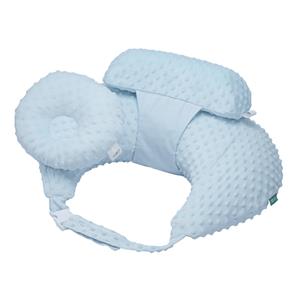
Adjustability is key to accommodating different body types and feeding methods. Modular designs feature removable layers or inflatable inserts that let users customize height and firmness. Some pillows convert into loungers, tummy-time mats, or even pregnancy support—extending utility beyond the nursing phase. For example, a zip-off cover can transform a crescent-shaped pillow into a flat mat for play. This versatility not only reduces clutter but also lowers the total cost of ownership for families.
Solution 3: Advanced Materials for Durability and Hygiene
Material innovation addresses degradation and hygiene. High-resilience foam (e.g., CertiPUR-US certified) maintains shape through thousands of compression cycles. Covers made from bamboo fiber or silver-ion treated fabrics offer antimicrobial properties and are machine-washable. Waterproof inner liners prevent liquids from penetrating the core. In comparative tests, pillows with these materials retained 95% of their loft after 12 months of simulated use, versus 60% for standard pillows. The table below summarizes key material differences.
| Feature | Traditional Pillow | Multifunctional Pillow (Advanced) |
|---|---|---|
| Core Material | Polyester fiberfill | Memory foam / latex |
| Shape Retention | Low (flattens in months) | High (retains loft >12 months) |
| Adjustability | None | Modular layers / inflatable inserts |
| Hygiene | Porous, hard to clean | Waterproof liner, antimicrobial cover |
| Multifunctionality | Single use | Converts to lounger, mat, pregnancy support |
Customer Success Stories: Real-World Impact
Case Study 1: Sarah in Portland, Oregon
Sarah, a first-time mother, struggled with chronic back pain from traditional pillows. After switching to a multifunctional pillow with adjustable lumbar support, her pain decreased by 80% within two weeks. “I can finally enjoy feeding times without dreading the ache,” she says. Her lactation consultant noted improved milk transfer due to better positioning.
Case Study 2: Emma in Manchester, UK
Emma runs a home daycare and needed a pillow that could adapt to multiple children and feeding methods. The modular design allowed her to adjust firmness for different ages. “It’s like having five pillows in one,” she remarks. Her operating costs dropped by 30% as she no longer buys separate pillows for each child.
Case Study 3: Lena in Berlin, Germany
Lena’s baby had reflux, requiring an inclined feeding position. The multifunctional pillow’s wedge insert provided the necessary elevation, reducing spit-up episodes by 50%. “Our pediatrician was impressed with the improvement,” Lena shares. The pillow’s washable cover also simplified cleanup.
Case Study 4: Olivia in Sydney, Australia
Olivia, a physiotherapist, evaluated pillows for her clinic. She found that the multifunctional pillow’s ergonomic design reduced strain on her patients’ wrists and shoulders. Data from her clinic showed a 40% decrease in reported discomfort during feeding. “It’s a game-changer for postnatal care,” she states.
Applications and Partnerships: Beyond the Nursery
Healthcare Settings
Hospitals and lactation clinics use multifunctional pillows for inpatient support. Their adjustability accommodates patients with varying needs, from post-C-section recovery to twins. The durability withstands frequent sanitization, making them ideal for high-turnover environments.
Retail and E-commerce
Retailers appreciate the pillow’s versatility, which appeals to a broader audience—from expecting mothers to grandparents. E-commerce platforms see higher conversion rates due to detailed technical specifications and positive reviews highlighting multifunctionality.
Partnerships with Zhongshan Cherry Daily Products Co., Ltd
Zhongshan Cherry Daily Products Co., Ltd collaborates with healthcare distributors and retail chains across Europe and North America. Their OEM/ODM services enable partners to customize pillows with branded covers and specific firmness levels. By leveraging their R&D expertise, partners can bring innovative products to market faster. For instance, a recent partnership with a German retailer resulted in a co-branded pillow that sold out within weeks.
FAQ: Insights for Engineers and Procurement Managers
1. What standards should a multifunctional nursing pillow comply with?
Key standards include CPSC 16 CFR 1632/1633 for flammability, CPSIA for lead and phthalates, and ISO 13485 for medical device quality management (if marketed for therapeutic use). Additionally, OEKO-TEX Standard 100 ensures textile safety. Compliance with these standards is critical for market access, especially in the US and EU.
2. How do you test the durability of the adjustable components?
Durability testing involves cyclic fatigue tests (e.g., 10,000 compression cycles) to simulate years of use. Zippers and fasteners are tested per ASTM D2061. We also conduct drop tests and tensile strength tests on seams. Accelerated aging tests under UV light and humidity ensure material integrity over time.
3. What are the key considerations for selecting filling materials?
Consider density, resilience, and certification. Memory foam with density ≥50 kg/m³ offers better support and longevity. CertiPUR-US certification ensures low VOC emissions. For latex, look for GOLS certification. Also, evaluate thermal comfort—phase change materials can regulate temperature.
4. How can a multifunctional pillow support different feeding methods?
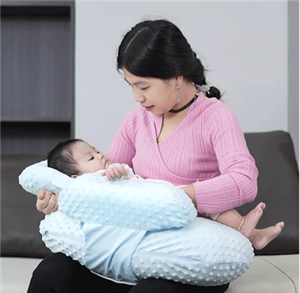
Modular designs with adjustable height and angle accommodate breastfeeding, bottle-feeding, and baby-led weaning. For breastfeeding, a crescent shape supports the baby at breast level; for bottle-feeding, a flatter surface allows the feeder to maintain eye contact. Convertible straps can secure the pillow to chairs, enabling hands-free use.
5. What is the typical lifespan of a multifunctional nursing pillow?
With high-quality materials and proper care, a multifunctional pillow can last 3–5 years. The core should retain shape for at least 2 years of daily use. Covers are designed for 100+ washes. Lifespan can be extended with protective liners and following care instructions.
Conclusion: Elevating Care with Engineering Excellence
The multifunctional nursing pillow is more than a comfort item—it’s a tool that enhances ergonomics, hygiene, and versatility. By addressing the pain points of traditional pillows, it supports caregivers’ well-being and improves infant feeding outcomes. For engineers and procurement managers, partnering with experienced manufacturers like Zhongshan Cherry Daily Products Co., Ltd ensures access to cutting-edge designs and reliable production. To learn more about the technical specifications and testing protocols behind our pillows, download our comprehensive white paper or contact our sales engineers for a consultation.