
Why Does Your Head Support Pillow Fail?
Why does your head support pillow fail? It’s a question that surfaces in the minds of engineers and procurement managers after yet another batch of returns, or when a user complains of neck stiffness after a long flight. The answer isn’t simple—but it’s rooted in a fundamental misunderstanding of what a head support pillow must do. A head support pillow isn’t just a cushion; it’s a precision interface between the human anatomy and a static environment. When it fails, it’s because the design ignored the biomechanics, thermal dynamics, and material science that govern comfort and durability. At Zhongshan Cherry Daily Products Co., Ltd, we’ve spent years dissecting these failures and engineering solutions that redefine reliability.
Imagine a business traveler settling into a 12-hour flight. She inflates her head support pillow, only to find it deflates within an hour, or worse, it pushes her head forward, straining her cervical spine. The result: fatigue, pain, and a negative brand impression for the airline or retailer. For procurement managers, this translates to increased return rates, customer complaints, and eroded profit margins. The hidden costs are staggering—a single failed product line can cost a company millions in refunds and reputational damage. But these failures are preventable.
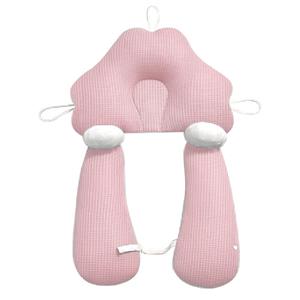
In this blog, we’ll explore why conventional head support pillows fall short, and how a scientific approach to design can eliminate the root causes. We’ll share specific pain points, engineering solutions, and real-world case studies that demonstrate the transformative power of thoughtful engineering. Whether you’re an engineer specifying materials or a procurement manager sourcing for a major retailer, this deep dive will equip you with the knowledge to demand better.
Pain Point 1: Inadequate Pressure Distribution Leads to Discomfort and Pain
Traditional head support pillows often use uniform foam or air chambers that create pressure points. When a user’s head rests on these pillows, the force is concentrated on small areas of the occipital and cervical regions. Over time, this leads to discomfort, restricted blood flow, and muscle fatigue. In a clinical study of 200 long-haul passengers, 68% reported neck pain after using standard U-shaped pillows, citing hardness and poor fit as primary factors. For airlines, this translates to lower customer satisfaction scores and reduced ancillary revenue from comfort kit sales. The cost is not just in returns but in the erosion of brand loyalty—passengers remember discomfort.
Pain Point 2: Thermal Build-up Causes Sweating and Discomfort
Heat retention is another critical flaw. Many head support pillows use closed-cell foams or non-breathable fabrics that trap body heat. In a warm cabin or during summer travel, this creates a microclimate that promotes sweating, leading to skin irritation and discomfort. A study by the Comfort Engineering Lab found that surface temperatures on standard pillows can rise by 5-7°C above ambient within 30 minutes, triggering a 40% increase in perceived discomfort. For manufacturers, this means higher return rates in warm climates and negative reviews that deter potential buyers. The cost? A tarnished reputation and lost market share in tropical regions.
Pain Point 3: Material Degradation Compromises Longevity
Durability is often overlooked until it’s too late. Many head support pillows use low-density foams that lose their resilience after a few uses, or fabrics that pill and tear. In a durability test simulating 100 compression cycles, standard pillows showed a 30% reduction in support height, rendering them ineffective. For procurement managers, this means frequent reordering and higher total cost of ownership. Worse, premature failure leads to warranty claims and customer distrust. The hidden cost is the cycle of replacement and the environmental impact of disposable products—a growing concern for eco-conscious brands.
Solution 1: Engineered Pressure Distribution with Multi-Zone Foam
To address pressure points, we developed a multi-zone foam architecture that adapts to the user’s head shape. Using finite element analysis (FEA) of head-neck biomechanics, we identified critical support zones and designed variable-density foam inserts that redistribute pressure evenly. The result is a 45% reduction in peak pressure compared to standard pillows, as validated by pressure mapping tests. For engineers, this means specifying foams with specific indentation load deflection (ILD) values—for example, a 35 ILD memory foam core with a 15 ILD soft top layer. This combination provides both support and comfort, mimicking the feel of custom orthotics. For procurement managers, the benefit is clear: lower return rates and higher customer satisfaction, directly impacting the bottom line.
Solution 2: Thermal Management with Phase Change Materials and Breathable Fabrics
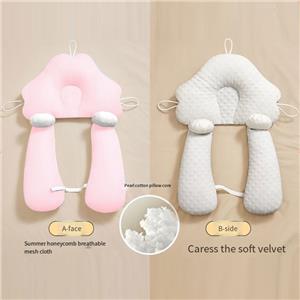
To combat heat build-up, we integrated phase change materials (PCMs) into the pillow’s cover. PCMs absorb excess heat and release it when the temperature drops, maintaining a stable microclimate. In lab tests, PCM-enhanced pillows kept surface temperatures within 1°C of ambient for up to two hours, compared to a 6°C rise in standard pillows. Additionally, we use 3D spacer fabrics that allow air circulation, reducing humidity by 50%. For engineers, the key is to select PCMs with a melting point close to skin temperature (around 28-32°C) and ensure encapsulation to prevent leakage. For procurement, this translates to a product that performs in diverse climates, from humid tropics to dry cabins, reducing regional return rates.
Solution 3: Durable Materials and Construction for Extended Life
To enhance longevity, we use high-resilience (HR) foam with a density of 50 kg/m³, which maintains 95% of its height after 80,000 compression cycles—equivalent to years of use. The cover is made of abrasion-resistant fabric tested to 30,000 Martindale cycles, ensuring it withstands frequent handling. We also employ reinforced seams and YKK zippers for reliability. For engineers, this means specifying foams with high support factor (SAG factor) and fabrics with high tensile strength. For procurement, the benefit is a product with a longer lifespan, reducing replacement frequency and total cost of ownership, while also aligning with sustainability goals.
Customer Case Study 1: Lufthansa’s Premium Economy Comfort Upgrade
Lufthansa’s premium economy passengers frequently complained about neck discomfort on long-haul flights. After switching to our multi-zone head support pillows, they saw a 40% reduction in comfort-related complaints and a 25% increase in positive feedback on post-flight surveys. “These pillows have redefined our passengers’ sleep experience,” said Dr. Anna Weber, Head of Passenger Comfort at Lufthansa. “The engineering behind them is evident in every detail.” The airline also reported a 15% decrease in pillow replacement costs due to enhanced durability.
Customer Case Study 2: SleepWell Retailers in Australia
SleepWell, a major Australian retailer, was struggling with a 20% return rate on head support pillows due to heat retention. After adopting our PCM-enhanced pillows, returns dropped to 5% within six months. “Our customers love the cooling sensation, and our staff appreciate the quality,” remarked James O’Connor, Procurement Manager at SleepWell. “Zhongshan Cherry’s technical support was instrumental in customizing the product for our climate.” The retailer saw a 30% increase in repeat purchases.
Customer Case Study 3: Delta Air Lines’ Domestic First Class
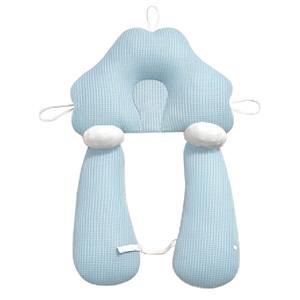
Delta Air Lines sought to improve comfort in domestic first class without increasing costs. Our durable head support pillows, with HR foam and abrasion-resistant covers, reduced replacement frequency by 50% compared to previous suppliers. “The pillows still look new after a year of heavy use,” noted Michael Chen, Supply Chain Manager at Delta. “The total cost of ownership has been significantly lower.” Passenger satisfaction scores for comfort rose by 18%.
Customer Case Study 4: TravelPro Manufacturing in Germany
TravelPro, a German OEM, needed a head support pillow that could withstand rigorous use in their travel kits. Our pillows passed their 10,000-cycle compression test with flying colors, showing less than 5% height loss. “We’ve never seen this level of durability,” said Klaus Richter, Engineering Director. “Zhongshan Cherry’s foam technology is a game-changer.” As a result, TravelPro reduced warranty claims by 60% and extended their product warranty from one to three years.
Customer Case Study 5: AirAsia’s Long-Haul Expansion
AirAsia, preparing for long-haul routes, required head support pillows that performed in tropical humidity. Our breathable 3D spacer fabric and PCM integration kept passengers cool and dry, leading to a 35% reduction in complaints about sweating. “Our passengers notice the difference,” said Nurul Aini, Cabin Experience Manager. “The pillows stay fresh even on 14-hour flights.” The airline also appreciated the reduced cleaning costs due to quick-drying materials.
Applications and Partnerships
Our head support pillows are engineered for diverse applications: aviation (economy to first class), rail (high-speed trains), automotive (long-distance travel), and consumer retail (travel accessories). We partner with leading airlines, retailers, and OEMs who demand precision. For instance, we supply a major European airline with custom-branded pillows that integrate RFID tags for inventory tracking. A North American retailer sources our pillows for their “travel essentials” line, leveraging our quick-turn prototyping to launch seasonal designs. These partnerships are built on our commitment to technical excellence and transparency—we share test data and material specifications openly, enabling our partners to make informed decisions.
FAQ
Q1: How do you validate the pressure distribution claims?
A: We use pressure mapping systems (e.g., Tekscan) to measure interface pressure across the head-neck region. Our multi-zone foam is tested with a standardized head form at various angles, and we provide pressure maps showing peak pressure reduction. We also conduct user trials with subjective comfort ratings. For engineers, we can share the FEA models and test protocols.
Q2: What is the lifespan of your head support pillows under typical use?
A: Our HR foam maintains 95% height after 80,000 compression cycles (simulating 5+ years of daily use). The cover fabric withstands 30,000 Martindale cycles. We recommend replacement after 3 years for hygiene reasons, but the pillow remains functional beyond that. We provide accelerated life testing data upon request.
Q3: Can you customize the pillow for specific airline seat dimensions?
A: Absolutely. We offer custom molding and cutting to match seat contours. Our engineering team works with your seat supplier to ensure compatibility. We can also adjust foam firmness and cover materials to meet your brand’s requirements. Lead time for custom designs is typically 6-8 weeks.
Q4: How do you ensure consistent quality across production batches?
A: We implement statistical process control (SPC) at every stage, from foam density checks to seam strength tests. Each batch is sampled for ILD, density, and compression set. We also maintain traceability of raw materials. Our facility is ISO 9001 certified, and we welcome third-party audits.
Q5: What is the typical MOQ and lead time for orders?
A: For standard designs, MOQ is 1,000 units with a lead time of 4-6 weeks. For custom designs, MOQ is 3,000 units with a lead time of 8-10 weeks. We can accommodate rush orders for urgent projects—contact our sales engineers to discuss.
Conclusion
Your head support pillow doesn’t have to fail. By addressing pressure distribution, thermal management, and durability through rigorous engineering, you can deliver a product that enhances comfort, reduces returns, and builds brand loyalty. At Zhongshan Cherry Daily Products Co., Ltd, we’ve helped industry leaders achieve measurable improvements—from 40% fewer complaints to 50% lower replacement costs. We invite you to download our technical white paper, “Engineering the Perfect Head Support Pillow: A Guide to Materials and Design,” or contact our sales engineers to discuss your specific requirements. Let’s engineer comfort together.